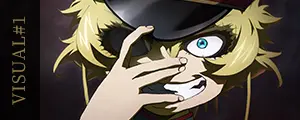
Saga of Tanya the Evil II continues the military fantasy story of Tanya von Degurechaff, a brilliant and ruthless mage officer caught in a brutal alternate-world war. After the events of the first season and the movie, Tanya once again finds herself at the center of the Empire’s increasingly complicated military campaign.
Season
Season 2
Genre
Action • Military • Fantasy • Drama
Studio
NUT
Introduction to Saga of Tanya the Evil II
Saga of Tanya the Evil II brings back one of anime’s most distinctive military fantasy protagonists. Tanya von Degurechaff is a young-looking Imperial officer whose appearance hides an experienced adult mind, extraordinary magical ability, and a strong desire to survive through logic and careful planning.
The second season moves the story into a new stage of the war. The Empire is surrounded by increasingly difficult military and political circumstances, while Tanya continues trying to protect her career and personal survival. Instead of finding the peaceful administrative position she wants, Tanya is once again pushed toward the front lines.
The official story begins in Unified Year 1926, during autumn. Tanya is appointed commander of the newly formed Salamander Combat Group. Although the unit looks powerful from the outside, it is actually made up of personnel brought together under difficult circumstances.
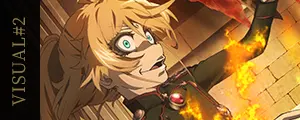
Official Saga of Tanya the Evil II visual
Tanya von Degurechaff Returns
Tanya remains the central figure of the series. Her greatest advantage is not simply magical power. She combines military knowledge, strategic thinking, battlefield experience, and a highly practical understanding of human behavior.
Tanya’s personality continues to create one of the most interesting contrasts in the story. She wants stability, safety, promotion, and eventually a comfortable life away from danger. Unfortunately for her, nearly every decision she makes seems to place her closer to another battlefield.
Her relationship with the military system is also complicated. Tanya understands that following orders and achieving results can improve her position, but the same success repeatedly causes superiors to assign her more dangerous missions.
The Salamander Combat Group
One of the major elements of Season 2 is the newly organized Salamander Combat Group. Tanya is appointed as its commander and must turn a collection of soldiers into an effective combat force.
The group may appear impressive on paper, but the official introduction describes it as essentially a hastily assembled collection of personnel. This creates another problem for Tanya: she has to deal with an organization that does not necessarily have the cohesion of a traditional elite unit.
Tanya’s leadership skills are therefore placed under additional pressure. She must evaluate soldiers quickly, understand their strengths, and use limited resources while facing an increasingly dangerous war.
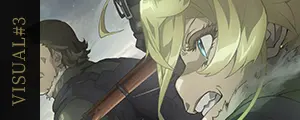
Official Season 2 visual
A War That Refuses to End
The central conflict of Saga of Tanya the Evil has always been more complicated than a simple battle between two armies. Different nations have different goals, military strategies, and political interests.
Season 2 continues this atmosphere. The Empire is trapped in a difficult situation, while other nations seek decisive victories that might finally end the conflict.
The problem is that every side’s definition of victory can lead to another stage of escalation. Tanya sees this situation from the perspective of a professional soldier who wants to survive, but she is repeatedly caught in decisions made by people far above her rank.
The Northern Front and the Winter Campaign
The official Season 2 introduction specifically points toward an early winter affecting the Federation front. The Empire finds itself struggling through a difficult situation with no obvious easy exit.
Weather and geography become important parts of military strategy. A battlefield is never only about soldiers and weapons. Supply lines, transportation, visibility, temperature, terrain, and fatigue can all change the result of an operation.
This fits the tone of Saga of Tanya the Evil, where warfare is presented through planning and logistics as much as through magical combat.
Visha and Tanya’s Partnership
Viktoriya Ivanovna Serebryakov, commonly known as Visha, remains one of Tanya’s most important companions. Her relationship with Tanya is built around military discipline, trust, and repeated exposure to dangerous situations.
Visha provides a different personality from Tanya. While Tanya often approaches situations through calculations and efficiency, Visha brings a more human and emotionally grounded perspective.
Their partnership is especially important when the pressure of combat increases. Tanya may be the commander, but successful military operations depend on communication and cooperation with the soldiers around her.
Rerugen and the Military Command
Colonel Anson Rerugen continues to represent one of the more complicated relationships in Tanya’s military career. He recognizes Tanya’s abilities while also understanding how dangerous her effectiveness can become.
Tanya’s success often creates problems for the command structure because exceptional battlefield performance can result in additional responsibilities. From Tanya’s point of view, every promotion or successful mission can become another reason for someone to send her somewhere unpleasant.
Rudersdorf and Zettour
General Rudersdorf and General Zettour remain important figures within the Imperial military structure. Their strategic decisions influence the wider direction of the war and, indirectly, Tanya’s assignments.
Their presence also reinforces one of the series’ recurring ideas: individual soldiers can be extremely capable, but they still operate inside a much larger political and military system.
Weiss and the Imperial Mages
Weiss is another familiar face returning for Season 2. As an experienced Imperial mage officer, he understands the realities of aerial combat and the dangers of Tanya’s missions.
The Imperial mage forces are one of the defining elements of the series. Rather than traditional fantasy armies, these soldiers use magical technology and flight to perform military operations.
Grantz, Koenig and Neumann
The Imperial forces are supported by several recurring officers including Grantz, Koenig, and Neumann. These characters help make the military organization feel larger than Tanya alone.
Their different roles also show how battlefield success depends on multiple specialists. Tanya may create the strategy, but communication, reconnaissance, formation control, and execution remain essential.
Mary Sue’s Continuing Story
Mary Sue is another important character connected to the wider conflict. Her presence adds another personal dimension to the war and connects Tanya’s story with events beyond the Empire’s immediate military objectives.
The conflict between personal motivations and military orders becomes increasingly important as the war continues. Characters such as Mary demonstrate that the consequences of the war extend far beyond strategic maps and battle plans.
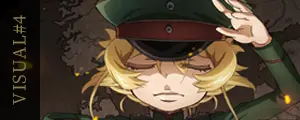
Tanya von Degurechaff — Season 2 official visual
Military Magic and Aerial Combat
One of the most recognizable features of Saga of Tanya the Evil is its combination of military warfare and magic. Soldiers can fly through the air, use magical weapons, and perform combat maneuvers that would be impossible for ordinary infantry.
Season 2 continues this approach while maintaining the military atmosphere of the franchise. Battles are not simply displays of magical power. Positioning, communication, speed, formation, and tactical decisions remain important.
Tanya’s Combat Philosophy
Tanya does not approach combat like a traditional heroic protagonist. Her decisions are generally based on efficiency and survival rather than ideals of glory.
This makes her battlefield behavior unpredictable. She understands that winning a battle does not necessarily mean achieving a long-term objective, and she often tries to calculate the consequences of every decision.
Her experience allows her to react quickly when circumstances change. However, the larger war repeatedly creates situations where even Tanya cannot control the final result.
The Difference Between Tanya’s Appearance and Mind
Tanya’s physical appearance remains one of the central contrasts of the series. She looks like a young girl, but her behavior, vocabulary, military knowledge, and strategic thinking are very different from what people expect from her appearance.
This contrast creates both comedy and tension. Other characters can underestimate her because of how she looks, while Tanya herself is constantly frustrated by the circumstances surrounding her.
Being X and Tanya’s Fate
Tanya’s unusual existence is connected to the mysterious entity commonly known as Being X. Their conflict is one of the philosophical foundations of the story.
Tanya believes strongly in logic and human decision-making. Being X repeatedly attempts to push her toward a different understanding of faith and destiny.
Their conflict gives the military story an additional supernatural layer. Tanya may be fighting nations on the battlefield, but she is also struggling against a force that appears to influence the circumstances around her.
The Psychological Side of War
Saga of Tanya the Evil is not only about explosions and magical battles. The psychological consequences of war are also important.
Soldiers are forced to make decisions under pressure, often without knowing what will happen next. Commanders must send people into dangerous situations while understanding that the consequences can be permanent.
Tanya’s extremely pragmatic personality allows her to function within this environment, but the series repeatedly shows how difficult the larger situation has become.
Politics Behind the Battlefield
Military operations are influenced by political objectives. Generals may understand one thing while politicians want another, and battlefield commanders must adapt to decisions made far away from the front.
Tanya’s frustration often comes from this exact conflict. She wants predictable conditions and rational decision-making, but war rarely provides either.
The Empire’s Difficult Position
Season 2 begins with the Empire facing serious pressure. The official introduction describes an Empire struggling through a difficult and increasingly muddy war while other nations seek a decisive victory.
Tanya therefore returns to the battlefield at a moment when the military situation is becoming more complicated. Her new command is not simply another assignment; it is part of a much larger attempt to respond to changing circumstances.
Animation by NUT
Saga of Tanya the Evil II is animated by NUT, the same studio associated with the previous television anime and the franchise’s cinematic continuation.
The production team includes director Takayuki Yamamoto, series composition and script by Kenta Ihara, and character design and chief animation direction by Yuji Hosogoe.
The production also includes detailed design work for magical devices, weapons, props, uniforms, and other military elements, helping preserve the series’ distinctive visual identity.
Visual Style of Season 2
The visual style continues to combine dark military imagery with dramatic magical combat. Tanya’s expressions, military uniforms, weapons, aircraft, and battlefield environments all contribute to the atmosphere.
The official promotional visuals emphasize the darker and more intense side of the second season, with Tanya frequently shown surrounded by military imagery and conflict.
Music by Shuji Katayama
Music for Season 2 is composed by Shuji Katayama. The soundtrack continues the franchise’s serious military tone, combining dramatic orchestral atmosphere with tension suitable for battlefield scenes.
The official soundtrack was digitally released beginning July 9, 2026 and includes tracks such as “The Evil is back” and “Creepy Snowy Night.”
Season 2 Opening Theme
The Season 2 opening theme is “Why? RED induction” performed by MYTH & ROID. The group returns to the franchise for another opening theme, continuing the strong musical identity associated with Saga of Tanya the Evil.
Season 2 Ending Theme
The ending theme is “Weiter! Weiter!”, performed by Aoi Yuki as Tanya von Degurechaff. The song gives the ending sequence a character-focused connection to Tanya herself.
The Return of Yojo Shenki
A new version of the mini-anime series Yojo Shenki 2 also accompanies Season 2. According to the official announcement, the mini-anime airs after the main television episodes and is also distributed online for a limited period.
These short episodes provide a lighter contrast to the main series, which focuses heavily on warfare, military strategy, and dramatic conflict.
Why Season 2 Matters to the Story
The second season is important because it moves Tanya into a new phase of her military career. She is no longer simply an officer reacting to assignments. She is given command responsibility over an entire combat group.
This creates opportunities to explore Tanya as a commander, strategist, and leader while also placing her inside a war that has become increasingly difficult to control.
Tanya as a Commander
Command changes the nature of Tanya’s responsibilities. As a frontline soldier, she can focus primarily on her own survival and mission objectives. As a commander, she must also consider the abilities and limitations of the soldiers under her.
The Salamander Combat Group therefore provides a new environment for Tanya’s leadership style. She must create order from a unit that was not originally assembled as a perfectly unified team.
The Meaning of Victory
One of the central questions of Season 2 is what victory actually means in a war that continues to expand. Nations want an overwhelming victory that can bring the conflict to an end, but achieving such a result may require increasingly extreme military decisions.
Tanya’s personal idea of victory is much simpler: survive, advance her career, and eventually secure a peaceful life. The wider military system, however, repeatedly gives her reasons to remain on the battlefield.
Comedy Inside a Dark Military Story
Despite its serious setting, Saga of Tanya the Evil has always used comedy as part of its storytelling. Much of that humor comes from the contrast between Tanya’s extremely serious personality and the absurd situations in which she finds herself.
Her attempts to avoid danger frequently have the opposite effect, creating situations where she receives even greater responsibility.
The Character Dynamics
The series becomes more interesting because Tanya is surrounded by characters who do not always share her worldview. Visha, Rerugen, Rudersdorf, Zettour, Weiss, Grantz, Koenig, Neumann, and others all have different positions within the Imperial military structure.
Their interactions create a wider picture of the Empire and prevent the story from becoming a simple one-character military adventure.
Tanya Degurechaff — official Season 2 visual
Season 2 Episode Structure
KADOKAWA’s official animation portal lists Saga of Tanya the Evil 2 with a total of 12 episodes. The television season began broadcasting in Japan on July 8, 2026.
The official broadcast schedule includes AT-X, TOKYO MX, Sun TV, KBS Kyoto, BS11, and TV Aichi. Streaming information was also announced for ABEMA and d Anime Store, while Crunchyroll streams the series in a number of international territories.
International Streaming
Crunchyroll announced Saga of Tanya the Evil Season 2 as part of its Summer 2026 lineup. Availability was announced across North America, Central America, South America, Europe, Africa, Oceania, the Middle East, and CIS regions.
Streaming availability can differ depending on country and licensing arrangements, so viewers should check their local Crunchyroll catalog for the latest availability.
Production Team
- Original Work: Carlo Zen
- Original Character Design: Shinobu Shinotsuki
- Director: Takayuki Yamamoto
- Series Composition & Script: Kenta Ihara
- Character Design & Chief Animation Director: Yuji Hosogoe
- Music: Shuji Katayama
- Animation Production: NUT
Main Cast
- Tanya Degurechaff: Aoi Yuki
- Visha: Saori Hayami
- Rerugen: Shin-ichiro Miki
- Rudersdorf: Tessyo Genda
- Zettour: Hochu Otsuka
- Weiss: Daiki Hamano
- Grantz: Yusuke Kobayashi
- Koenig: Jun Kasama
- Neumann: Daichi Hayashi
- Mikel: Tomokazu Sugita
- William Drake: Toshiyuki Morikawa
- Liliya: Yoko Hikasa
- Mary: Haruka Tomatsu
What Makes Tanya Different?
Tanya is not written like a conventional fantasy hero. Her primary motivation is survival and personal stability, while the world around her keeps demanding sacrifice, loyalty, and military achievement.
She is intelligent enough to understand the consequences of war, but her desire to avoid danger repeatedly conflicts with her own ability to succeed on the battlefield.
That contradiction remains one of the defining features of the series.
The Dark Atmosphere of the Series
Saga of Tanya the Evil II maintains the dark atmosphere established by the original series. Snow-covered battlefields, military uniforms, aircraft, magical weapons, explosions, and tense command-room discussions all contribute to the show’s identity.
At the same time, the series continues to balance its serious military setting with moments of irony and dark comedy.
Final Thoughts
Saga of Tanya the Evil II continues Tanya Degurechaff’s story at a point where the war has become even more complicated. Her appointment as commander of the Salamander Combat Group places her in a new position of responsibility while the Empire struggles through another difficult stage of the conflict.
With NUT returning as the animation studio, a familiar cast of characters, new military challenges, and continued focus on magical warfare, the second season expands the world of Saga of Tanya the Evil while keeping Tanya at its center.
For viewers who enjoy military strategy, alternate-history fantasy, magical combat, political tension, and a protagonist who approaches war from a highly practical perspective, Season 2 continues the franchise’s distinctive style.
Note: Saga of Tanya the Evil II officially began airing in July 2026.
The season is listed with 12 episodes, and international streaming availability may vary by region.
Watch Saga of Tanya the Evil II
You can check the official website and available streaming platforms below.
Official Website Watch on Crunchyroll