Season
Season 1 — 13 Episodes
Genre
Action • Fantasy • Supernatural • Drama
Studio
A-1 Pictures
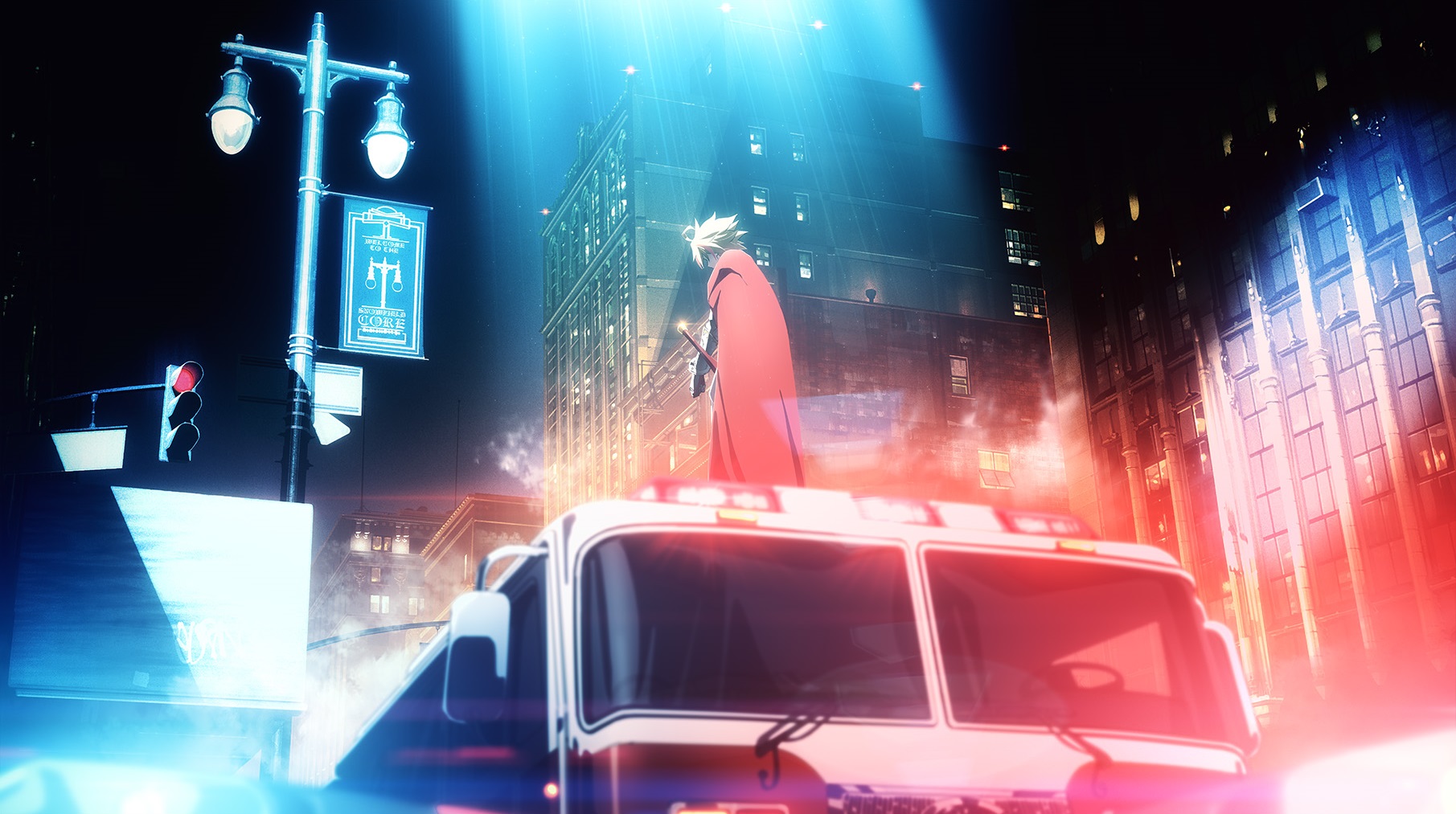
Fate/strange Fake brings the Holy Grail War into a completely different setting. Instead of the familiar streets of Fuyuki, the story takes place in Snowfield, United States, where a mysterious and distorted version of the Holy Grail War begins.
The anime follows a large group of Masters and Servants whose goals, identities and loyalties are constantly changing. At the center of this strange conflict are Ayaka Sajyou, Saber, Tiné Chelc, Archer, Lancer, Sigma, Flat Escardos, Orlando Reeve and many other characters.
The official television series began broadcasting in January 2026 and concluded its first television run with Episode 13. Following the broadcast of Episode 13, the official website announced that a new series is in production.
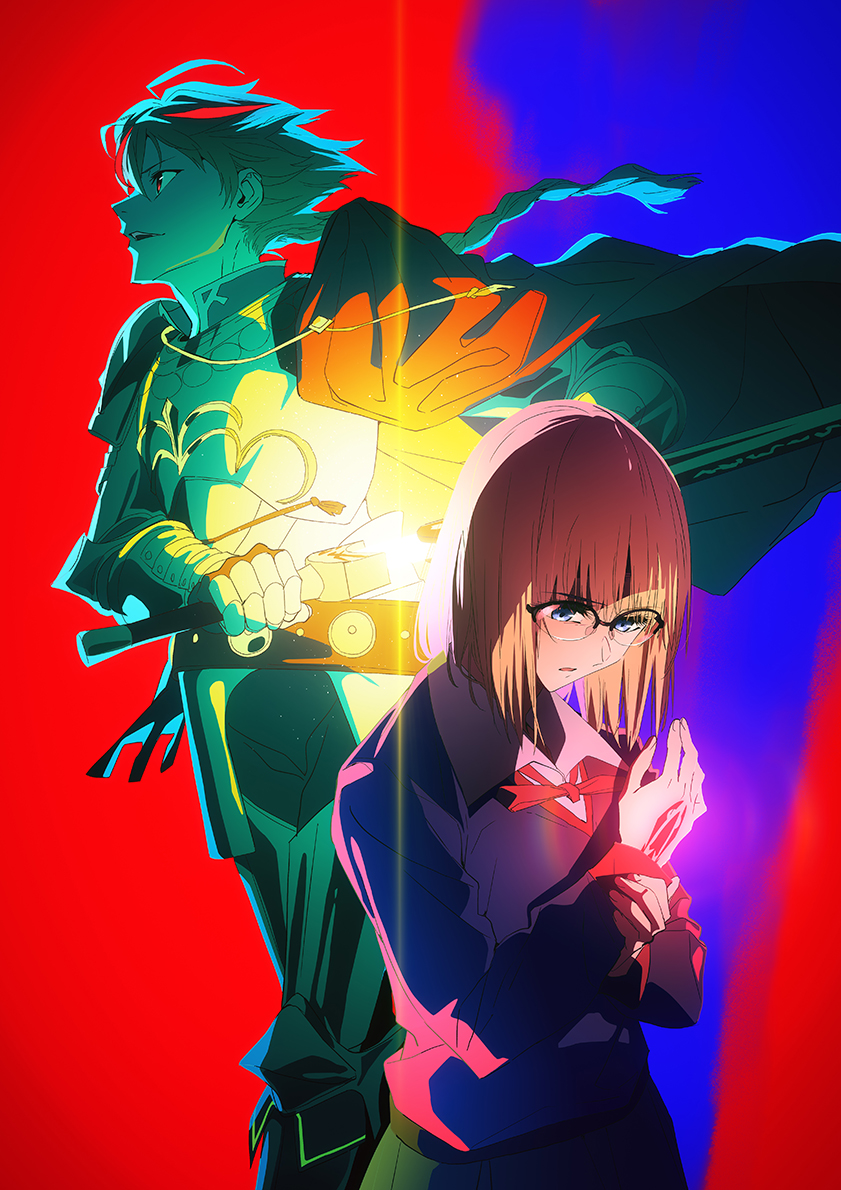
Official Fate/strange Fake visual
Introduction to Fate/strange Fake
Fate/strange Fake is based on the light novel written by Ryogo Narita with character illustrations by Shizuki Morii and the original Fate franchise created by TYPE-MOON.
The story introduces another Holy Grail War, but this one is fundamentally different from the traditional conflicts seen in other Fate stories. The war takes place in the United States, and the system itself has been corrupted, copied and distorted.
This unusual foundation allows the series to introduce familiar Fate concepts while creating completely new Masters, Servants and mysteries.
Snowfield — A New Battlefield
The city of Snowfield becomes the stage for the strange Holy Grail War. Unlike the traditional Japanese setting of Fuyuki, Snowfield provides the series with an American urban environment filled with highways, skyscrapers, police forces, underground facilities and mysterious magical organizations.
The city is not simply a background. Many of the characters have their own relationship with Snowfield, and ordinary civilians become caught between supernatural forces that they cannot fully understand.
The Fake Holy Grail War
The central concept of the series is the “Fake” Holy Grail War. The conflict resembles the traditional ritual but does not function exactly like it.
This creates uncertainty for almost every Master and Servant. Characters cannot always assume that the rules they know from other Holy Grail Wars will apply.
The result is a battle where information becomes just as valuable as magical power.
Ayaka Sajyou
Ayaka Sajyou is one of the central characters of Fate/strange Fake. Her journey is closely connected to Snowfield and to the mysterious circumstances surrounding the Holy Grail War.
Ayaka does not enter the story as a typical heroic Master. Her relationship with Saber gradually becomes one of the most important emotional elements of the series.
Her past and the reason she came to Snowfield are gradually explored as the story develops.
Saber — Richard the Lionheart
Saber is one of the most unusual Servants in the series. Unlike the quiet and highly disciplined image often associated with the Saber class, this Saber is energetic, expressive and fascinated by the modern world.
Richard the Lionheart’s personality creates a strong contrast with Ayaka. Their relationship is based not only on the traditional Master and Servant structure but also on mutual trust and developing friendship.
His identity as Richard I of England gives the character a historical foundation, while his personality makes him one of the more unpredictable Servants in the war.
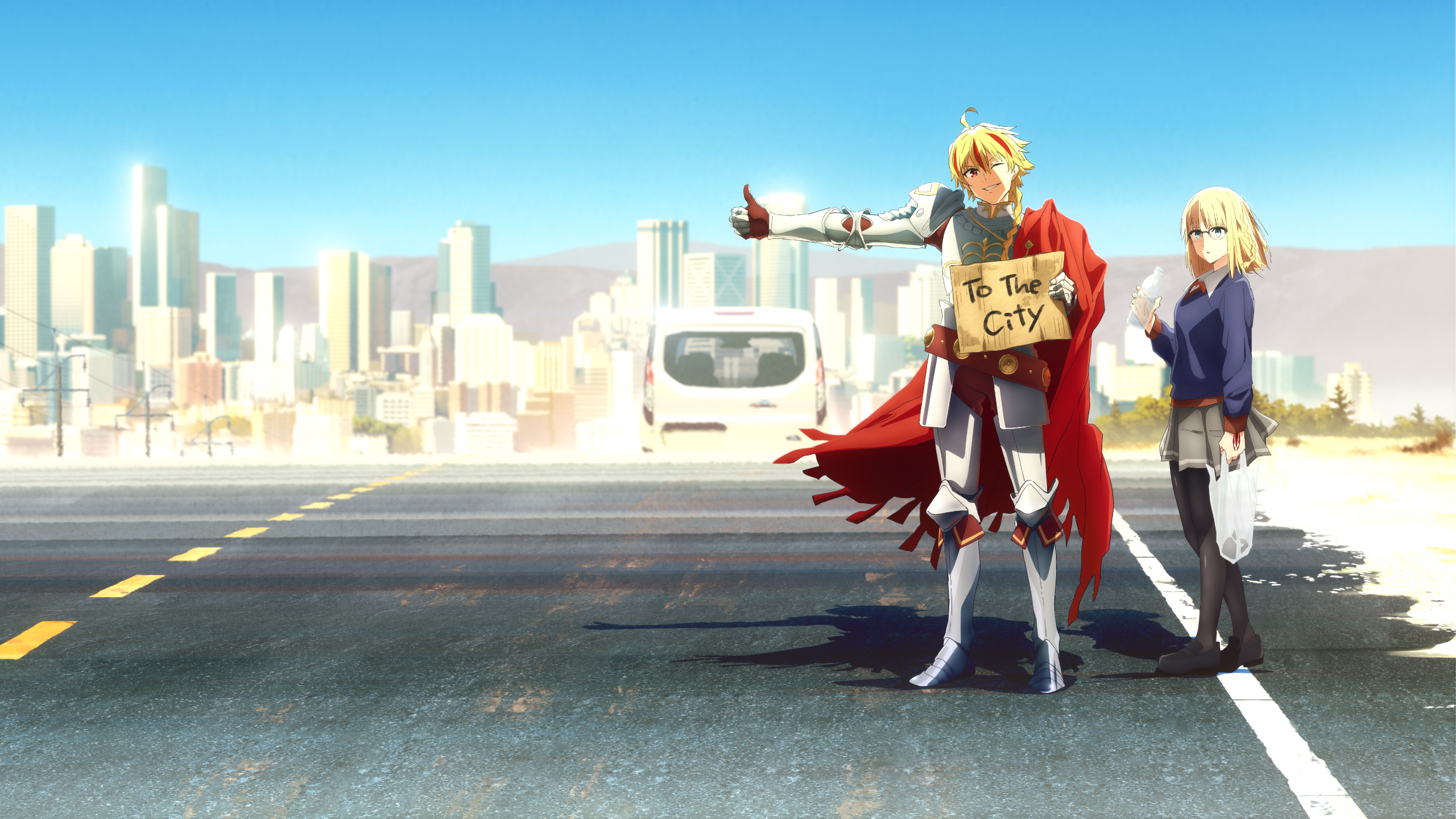
Saber and Ayaka — Official Fate/strange Fake visual
Tiné Chelc
Tiné Chelc is another important Master involved in the Snowfield conflict. She has a close connection to the Snowfield region and becomes connected to Archer.
Her character represents one of the many different backgrounds present in Fate/strange Fake. She is not simply participating in the war for personal glory; her motivations are connected to her people and the larger political situation surrounding Snowfield.
Archer
Archer is one of the major Servants in the story and is summoned by Tiné. His enormous presence immediately changes the balance of power in the conflict.
The Archer class in Fate has always been associated with powerful long-distance attacks, but this version of Archer brings his own identity, history and philosophy into the story.
His relationship with Tiné also creates an interesting contrast between an experienced heroic spirit and a young Master.
Lancer
Lancer is another major Servant participating in the Snowfield conflict. His appearance adds one of the most visually distinctive combat styles to the series.
The Lancer class traditionally emphasizes speed, close-range combat and powerful weapons. Fate/strange Fake uses these characteristics while giving the character a unique identity within the Fake Holy Grail War.
Orlando Reeve
Orlando Reeve is the chief of police in Snowfield and one of the most important human authorities in the city.
His position makes him unusual among the characters because he is directly involved with the consequences of the Holy Grail War while also having to deal with the ordinary responsibilities of protecting a city.
The conflict between supernatural events and law enforcement gives the series another layer beyond the traditional Master-versus-Master battles.
Jester Karture
Jester Karture is one of the more unpredictable figures connected to the Holy Grail War.
His personality and relationship with Assassin create a disturbing combination of comedy, manipulation and danger. Fate/strange Fake frequently uses characters like Jester to make it difficult for viewers to determine what will happen next.
Assassin
Assassin has a very different relationship with the Holy Grail War compared with many conventional Servants.
The character’s abilities and mysterious identity contribute to the series’ atmosphere of uncertainty. Assassin’s presence also reinforces the idea that the Fake Holy Grail War does not follow the expectations of a normal ritual.
Flat Escardos
Flat Escardos is one of the most unusual Masters in the series. His personality often contrasts with the seriousness of the magical world around him.
Flat’s relationship with his Servant, Berserker, creates moments of humor while also revealing the dangerous potential hidden beneath his cheerful behavior.
Berserker
Berserker represents one of the most mysterious elements of the Snowfield war. The Berserker class is traditionally associated with overwhelming physical strength and altered mental states.
In Fate/strange Fake, the Berserker situation becomes far more complicated, especially because of the relationship between Flat and his Servant.
Sigma
Sigma is a mercenary who becomes involved in the Fake Holy Grail War despite having little interest in the traditional ambitions associated with the Grail.
His character is defined by emptiness and uncertainty. Unlike Masters who enter the war with clear dreams, Sigma initially has no grand wish that he wants fulfilled.
This makes his relationship with his Servant particularly interesting.
The Strange Servant of Sigma
Sigma’s summoning produces a Servant unlike the normal heroic spirits expected from the ritual.
The official story specifically presents Sigma as a mercenary with no great desire for the world and describes the Servant chosen by the Fake Grail as an extremely unusual heroic spirit.
Their relationship becomes one of the mysteries of the series.
Hansa Cervantes
Hansa Cervantes is another important figure operating within the supernatural conflict.
His presence connects the story to the Church and the wider organizations that monitor magical activity. He brings experience and a different perspective to the increasingly chaotic situation in Snowfield.
Faldeus Dioland
Faldeus Dioland represents the government side of the conflict and is involved in planning and controlling events surrounding the Fake Holy Grail War.
His position demonstrates how the Snowfield ritual is not simply a private battle between magicians. Government agencies and secret organizations are also watching the situation.
Francesca Prelati
Francesca Prelati is one of the most unpredictable characters in the series. Her playful behavior hides a much more complicated role in the events of Snowfield.
She is connected to the wider history of the Fate universe and repeatedly appears in situations where the normal boundaries between ally and enemy become unclear.
The Many Masters
One of the biggest differences between Fate/strange Fake and simpler Holy Grail War stories is the number of important Masters.
Ayaka, Tiné, Flat, Sigma and the other participants do not simply exist to provide commands to their Servants. Their individual backgrounds and personalities directly influence the direction of the war.
The Many Servants
The same applies to the Servants. Each heroic spirit brings a different historical identity, combat style and relationship with their Master.
This creates a large network of relationships rather than a straightforward tournament.
Why the Holy Grail War Feels Different
The Fake Holy Grail War is designed around uncertainty. Some participants do not fully understand the ritual, while others possess information that is deliberately hidden from everyone else.
This means that an apparently minor character can suddenly become extremely important.
The Role of Information
In a normal battle, raw strength can sometimes determine the winner. In Fate/strange Fake, knowledge about an opponent’s identity and abilities can be just as important.
Masters must decide when to reveal their Servant’s abilities and when to hide them. Servants themselves must also determine how much information to share.
The Mystery of True Identities
Fate has always treated Servant identities as important mysteries. Knowing the historical identity of a Servant can reveal their strengths, weaknesses and possible Noble Phantasms.
Fate/strange Fake expands this concept through its unusually large cast and complicated battle structure.
Noble Phantasms
Noble Phantasms remain among the most visually impressive elements of the Fate franchise.
These legendary weapons and abilities allow the Servants to transform historical myths and legends into supernatural combat techniques.
Fate/strange Fake uses these abilities to create battles that can quickly move from ordinary urban combat to enormous supernatural confrontations.
Snowfield and the Modern World
One of the most interesting aspects of the series is the contrast between ancient heroic spirits and a modern American city.
Servants who belong to ancient historical periods suddenly find themselves surrounded by cars, smartphones, skyscrapers and modern weapons.
Saber in particular creates many memorable moments because of his fascination with modern culture.
Action and Battle Animation
Fate/strange Fake is animated by A-1 Pictures. The production places significant attention on large-scale action scenes, detailed environments and supernatural effects.
The battles often involve multiple characters and abilities at the same time, making movement and visual clarity especially important.
The Visual Identity
The anime combines dark nighttime city environments with bright magical effects. Neon lights, explosions, glowing weapons and supernatural creatures frequently appear against the Snowfield skyline.
This creates a visual identity that feels different from the traditional medieval-inspired imagery associated with some Fate stories.
Music by Hiroyuki Sawano
Music is composed by Hiroyuki Sawano, whose work gives the anime a dramatic and cinematic atmosphere.
The soundtrack combines orchestral elements with modern electronic and vocal production, matching the series’ mixture of ancient legends and modern warfare.
Opening Theme — PROVANT
The opening theme for the TV anime is PROVANT by SawanoHiroyuki[nZk]: Jean-Ken Johnny & TAKUMA.
The song accompanies the fast-moving visual presentation of the Masters, Servants and conflicts that define the Snowfield Holy Grail War.
The Emotional Side of Fate/strange Fake
Beneath the action, the anime is interested in questions of identity, purpose and relationships.
Ayaka wants to understand her place in the conflict. Sigma struggles with the question of what he actually wants. Tiné has responsibilities beyond herself. Flat’s personality hides a complicated relationship with his own abilities.
Ayaka and Saber
The relationship between Ayaka and Saber gradually becomes one of the emotional foundations of the story.
Saber is energetic and confident, while Ayaka is much more cautious. Their different personalities create both humorous and serious moments.
Their developing trust also becomes increasingly important as the Holy Grail War grows more dangerous.
Tiné and Archer
Tiné and Archer have another Master-Servant relationship built around trust, responsibility and the difference between human youth and heroic experience.
Tiné’s position in Snowfield gives her motivations that extend beyond simply winning the Grail War.
Flat and Berserker
Flat and Berserker provide one of the stranger combinations in the series. Their relationship can appear comedic, but the potential danger behind Berserker remains serious.
The contrast allows Fate/strange Fake to move between humor and danger without abandoning its darker atmosphere.
Sigma and His Purpose
Sigma’s lack of a clear wish is one of the reasons his story stands out. A Holy Grail War normally attracts people who want something desperately.
Sigma is different. His journey is more about discovering what he can become and whether he can form meaningful connections with other people.
Episode Structure
The television anime contains 13 numbered episodes in addition to the earlier TV special, Whispers of Dawn.
The first part establishes Snowfield, introduces the Masters and Servants, and gradually reveals how unusual the Fake Holy Grail War actually is.
Later episodes increase the scale of the conflicts and begin connecting the individual characters into larger battles.
Episode 1 — The Servant Incident
The opening episode introduces the unusual Holy Grail War and the city of Snowfield. Rather than focusing on only one Master, the episode establishes multiple characters and conflicts.
This gives the anime its ensemble structure from the beginning.
Episode 2 — Groups and Illusions
The second episode continues introducing the participants and expands the supernatural situation surrounding the city.
The growing number of characters makes it clear that this will not be a simple one-versus-one tournament.
The Middle Episodes
The middle portion of the series develops the relationships between Masters and Servants while revealing more information about the Fake Holy Grail War.
Sigma’s summoning, Flat’s unusual situation, Ayaka’s journey and the movements of the various organizations gradually begin connecting.
The Final Episodes
The final episodes bring several major conflicts together. The characters enter increasingly dangerous situations while the mysteries surrounding Snowfield become more difficult to ignore.
By Episode 13, the anime deliberately leaves major elements of the story open. The official post-episode announcement uses the phrase “to be continued.”
Episode 13 — A Dream Becoming Reality
Episode 13 enters a dreamlike and mysterious sequence involving Francesca and other characters. Ayaka and Saber are drawn into visions connected to the history of the Fourth Holy Grail War in Fuyuki.
The episode also allows Saber to confront an important truth connected to the legendary King of Knights, Artoria Pendragon.
Rather than providing a complete ending, the episode acts as a major transition toward the next part of the story.
Snowfield — Official Fate/strange Fake visual
The Fourth Holy Grail War Connection
Fate/strange Fake does not exist separately from the larger Fate universe. Episode 13 directly connects its dream sequence to events associated with the Fourth Holy Grail War.
This gives the series another connection to Fate’s established history while keeping its own characters at the center.
Richard and the Idea of Heroism
Richard’s interpretation of heroism is very different from the image of a traditional knight standing silently beside a Master.
He is enthusiastic, curious and fascinated by heroic stories. His personality makes the idea of being a hero feel like something alive rather than simply historical.
The Fate Universe
Fate/strange Fake expands the Fate universe by introducing another interpretation of the Holy Grail War.
Familiar concepts such as Masters, Servants, Command Spells, Noble Phantasms, heroic spirits and the Grail remain important, but the rules are modified by the Fake system.
The Novel by Ryogo Narita
The original Fate/strange Fake novel is written by Ryogo Narita, with the original Fate concept credited to TYPE-MOON and illustrations by Shizuki Morii.
The official website currently lists nine novel volumes. The franchise has also received a manga adaptation.
The Manga
The manga adaptation features art by Shizuki Morii and follows the same broad Snowfield Holy Grail War setting.
The manga and novel together provide a much larger story world surrounding the anime adaptation.
A-1 Pictures
A-1 Pictures handles the animation production. The studio is known for large anime productions and has experience with multiple Fate-related projects.
Fate/strange Fake uses detailed character animation, large magical effects and cinematic camera movement to present the Snowfield battles.
Official Directors
The series is directed by Shun Enokido and Takahito Sakazume. The series composition is handled by Daisuke Ohigashi, while character design is by Yukei Yamada.
Music is composed by Hiroyuki Sawano and animation production is handled by A-1 Pictures.
Official Main Cast
The main cast includes Kana Hanazawa as Ayaka Sajyou, Yuki Ono as Saber, Sumire Morohoshi as Tiné Chelc, Tomokazu Seki as Archer, Yuu Kobayashi as Lancer, Aoi Koga as Tsubaki Kuruoka and Wataru Hatano as Orlando Reeve.
Other major cast members include Shoutarou Morikubo as Caster, Ryutarou Okiayu as Jester Karture, Lynn as Assassin, Yoshitsugu Matsuoka as Flat Escardos, Kenyu Horiuchi as Berserker, Maaya Uchida as Francesca Prelati, Junya Enoki as Faldeus Dioland, Gakuto Kajiwara as Sigma and Katsuyuki Konishi as Hansa Cervantes.
Why the Cast Is So Large
Fate/strange Fake is built around a large ensemble cast. The story does not depend on one single Master or Servant.
Different characters have different goals, alliances and histories, meaning that the audience often has to follow several storylines at once.
The Importance of Snowfield
Snowfield gives the series a unique identity. The city combines ordinary modern life with an enormous supernatural conflict.
Police officers, civilians, government organizations, magicians and heroic spirits all exist within the same environment.
Action Meets Mystery
Fate/strange Fake is not structured as a pure action series. Every major battle usually introduces another question.
Who is the Servant? What is the Master’s real objective? What are the true rules of the Grail? Which organization is controlling the situation?
These questions keep the action connected to the mystery.
The Psychological Side
Many characters are forced to confront questions about their identity.
Ayaka must decide what she is willing to do. Sigma must discover whether he has a purpose. Flat must deal with the consequences of his unusual abilities. Tiné must balance her personal responsibilities with the danger surrounding her.
Comedy Inside the Chaos
Despite the dark subject matter, Fate/strange Fake includes plenty of comedy. Saber is one of the biggest sources of lighter moments, especially because of his enthusiasm for modern life.
Flat and Caster also contribute to the series’ more unpredictable humor.
The Dark Side of the Holy Grail War
The series does not hide the violent nature of the Grail War. Servants are powerful supernatural beings, and ordinary civilians can become caught in battles that they cannot understand.
The Fake system makes the situation even more dangerous because the participants do not always know what rules they are actually following.
New Series Confirmed
Following the broadcast of Episode 13, the official website announced that a new series of Fate/strange Fake is in production.
The August 2026 announcement also released a new promotional video and teaser visual. The announcement features Ayaka, Saber and Sigma and describes their continuing journey through the Fake Holy Grail War.
A specific release date for the new series has not been announced on the official website at the time of writing.
Official Fate/strange Fake visual
What Makes Fate/strange Fake Different?
The series stands out because it takes one of Fate’s most recognizable ideas and deliberately breaks its expected structure.
The Holy Grail War has more participants, more organizations and more mysteries. The setting is different, the rules are distorted and the characters are often difficult to predict.
Instead of presenting a simple competition, the anime creates a constantly changing network of relationships.
The Importance of Identity
Identity is one of the most important themes in Fate/strange Fake.
Servants are legendary figures living through modern bodies and identities. Masters are ordinary humans who suddenly become connected to supernatural beings. Some characters even hide their real motivations from themselves.
Heroic Spirits and Modern Society
The contrast between ancient heroic spirits and modern America creates many memorable situations.
Characters who belong to completely different historical eras are forced to understand modern technology, modern culture and modern warfare.
The Meaning of “Fake”
The word “Fake” refers to more than the unusual Holy Grail ritual. It also reflects the larger questions of identity, imitation and appearance that run throughout the story.
Characters frequently appear to be one thing while hiding another truth. The same idea applies to the Holy Grail War itself.
Visual Storytelling
The anime uses color and lighting to separate different moods. Snowfield’s nighttime scenes often use strong blue and purple tones, while magical attacks create bright flashes of red, gold and white.
This visual contrast helps the supernatural elements stand out against the modern city environment.
Final Thoughts
Fate/strange Fake introduces a new battlefield, a large collection of Masters and Servants, and a Holy Grail War that refuses to follow the normal rules.
Ayaka and Saber provide the emotional center, while characters such as Tiné, Archer, Sigma, Flat, Orlando, Faldeus and the various Servants expand the story into a much larger conflict.
The first television series concludes with Episode 13, but the story is far from complete. The official announcement of a new series means that the Snowfield Holy Grail War will continue.
With A-1 Pictures handling the animation, Hiroyuki Sawano providing the music, and a large cast of Masters and Servants driving the story, Fate/strange Fake offers a visually ambitious and mystery-heavy addition to the Fate universe.
Note:
The first TV series contains 13 episodes. The official website announced a
new series in August 2026, but a specific release date for that new series
has not yet been announced.
Watch Fate/strange Fake
Check the official website and your regional streaming services for current availability. Streaming platforms can differ depending on country.