Season
Season 1
Genre
Historical • Drama • Adventure
Studio
Science SARU
Jaadugar: A Witch in Mongolia is a historical drama anime set during the turbulent 13th century, a period shaped by the rise and expansion of the Mongol Empire. Rather than telling its story primarily through battles and armies, the series follows a young Persian girl named Sitara and explores how knowledge, education, survival, political intelligence, and personal determination can become powerful weapons.
The anime begins in the eastern Iranian city of Tus in 1213. Sitara has already experienced the loss of her mother and the painful separation from her homeland. She is taken into the household of Fatima, a kind-hearted woman from a family of scholars. At first, Sitara has little interest in studying, but Fatima’s son Muhammad gradually changes her understanding of knowledge.
Sitara learns that education is not simply about reading books or memorizing information. Knowledge can provide a person with choices when circumstances seem hopeless. That idea becomes central to the entire story.
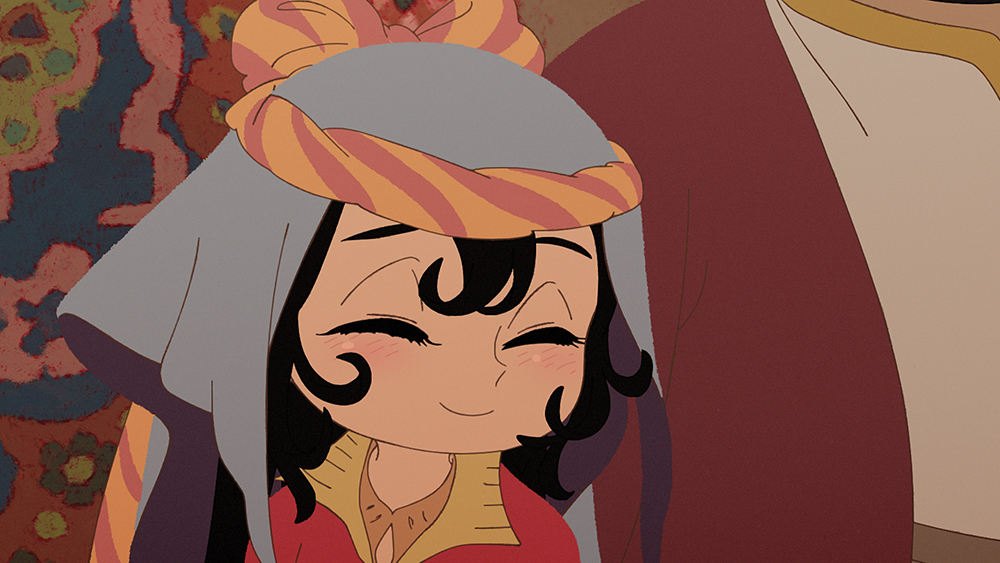
Sitara and the early world of Jaadugar.
Introduction to Jaadugar: A Witch in Mongolia
The Japanese title of the series is Tenmaku no Jādūgaru, and the anime is based on Tomato Soup’s manga A Witch’s Life in Mongol. The adaptation is produced by Science SARU, with Naoko Yamada serving as executive director and Abel Gongora as director.
What immediately separates Jaadugar from a conventional historical action anime is its focus on ordinary human lives inside enormous historical events. The Mongol Empire is expanding across territories, rulers are competing for power, and political structures are changing, but the story repeatedly returns to individual people and the choices they make within that system.
Sitara is especially interesting because she does not begin her journey as a warrior. Her greatest strength is her ability to learn, observe, remember, analyze, and adapt. When the world around her changes, she uses those abilities to survive.
Who Is Sitara?
Sitara is the central character of Jaadugar. Her early life is marked by displacement and loss. After being separated from her homeland and losing her mother, she is brought into Fatima’s household in Tus.
Her relationship with learning changes after she meets Muhammad. Instead of treating education as an obligation, Sitara begins to understand it as a source of freedom. She becomes deeply interested in knowledge and eventually develops the intellectual skills that will define her future.
This development is important because the series does not suddenly turn Sitara into an unbeatable genius. Her abilities are presented as something that grows through experience, study, observation, and difficult circumstances.
Fatima and the Power of Education
Fatima plays an important role in Sitara’s early life. She comes from a scholarly family and provides Sitara with an environment where learning is possible. Her influence helps establish one of the anime’s central themes: knowledge can change the way a person understands the world.
Fatima’s family is surrounded by books and scholarship, creating a sharp contrast with the violence and uncertainty that eventually reaches Tus. The peaceful academic environment becomes something Sitara carries with her even after her life is completely transformed.
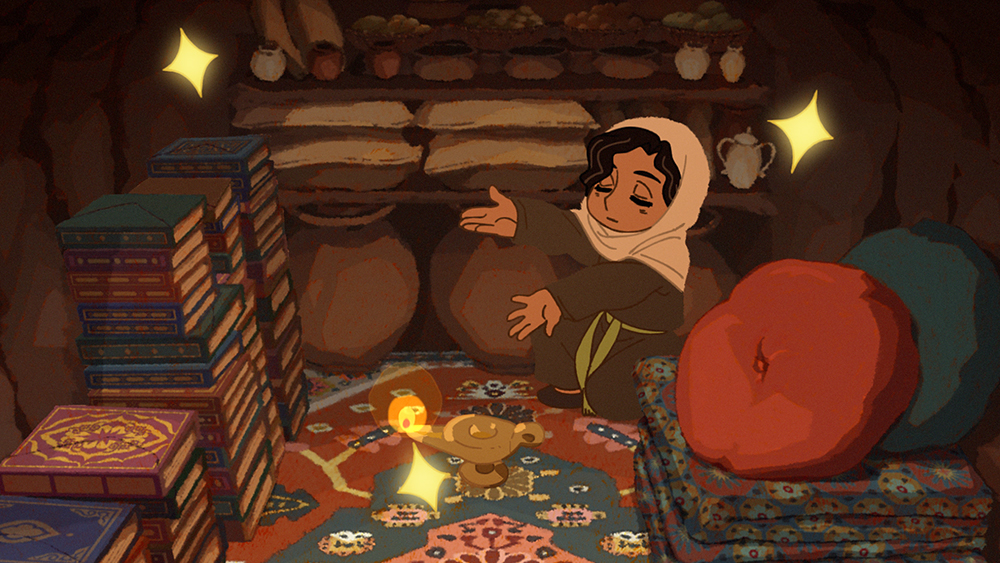
Knowledge and books are central symbols throughout the story.
Muhammad and Sitara’s Journey
Muhammad is Fatima’s son and an aspiring scholar. His influence on Sitara is one of the foundations of her character development. He encourages her to study and helps her understand why learning matters.
Their relationship also gives the early part of the anime a warmer atmosphere before the larger historical conflict reaches their home. Muhammad eventually leaves on a journey in pursuit of wisdom, while Sitara continues developing her own knowledge.
Years later, the lessons she learned become essential when the political and military world around her changes dramatically.
The Fall of Tus
The arrival of Tolui and the Mongol army changes Sitara’s life completely. Eight years after Muhammad leaves, the city of Tus is invaded. Fatima’s household is destroyed, and the treasured book Elements from Fatima’s late husband’s collection is taken.
Sitara is captured and suddenly finds herself inside the same imperial machine that destroyed the life she had built. This is the point where her relationship with knowledge takes on a new meaning.
She no longer studies simply because she wants to become wiser. Her knowledge becomes something she can use to understand the people around her and navigate an extremely dangerous environment.
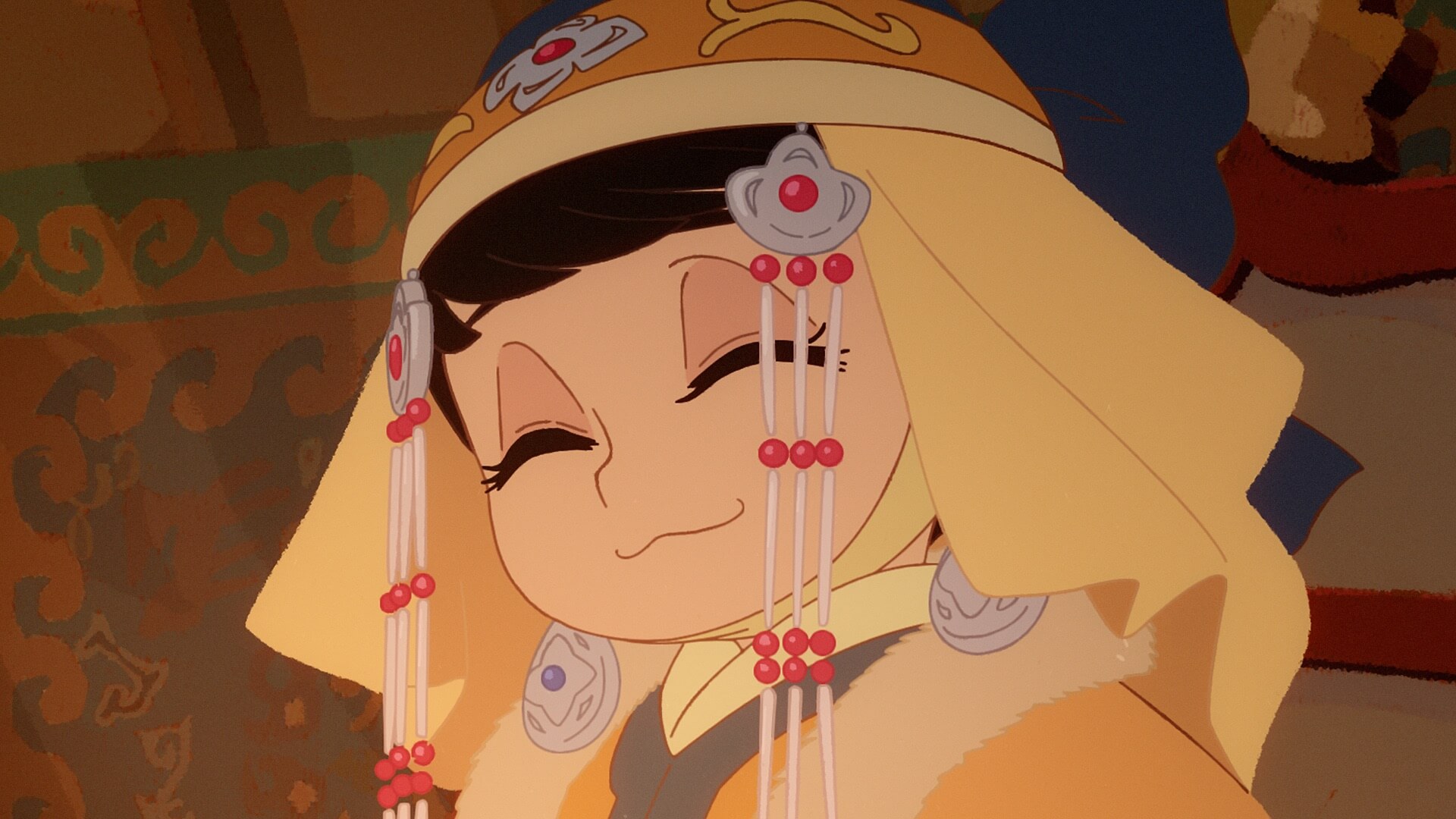
The story moves from scholarly life into the world of the Mongol court.
Shira — The Interpreter
After Sitara becomes a captive, she encounters Shira, a young boy who works as an interpreter for the Mongols. Shira becomes an important connection between Sitara and the new world surrounding her.
His position is particularly interesting because he exists between different cultures and languages. Through Shira, Sitara is able to communicate, gather information, and eventually gain access to people who hold greater political power.
Their relationship also demonstrates one of the anime’s recurring ideas: survival often depends upon relationships and information rather than physical strength alone.
Sitara Becomes “Fatima”
Sitara eventually decides that she needs to act if she wants to recover what was taken from her. After learning what happened to Fatima and understanding the importance of the stolen book, she makes a decision that changes the direction of her life.
She introduces herself to Tolui using the name “Fatima,” inherited from her former mistress. Outwardly, she presents herself as someone willing to serve the empire. Internally, however, she carries a deep desire for revenge.
This dual identity becomes one of the most important parts of Jaadugar. Sitara has to constantly control what she says, what she reveals, and how other people perceive her.
Tolui and the Mongol Empire
Tolui is the fourth prince of the Mongol Empire and one of the major figures in Sitara’s story. His army’s invasion of Tus is directly responsible for the destruction of Sitara’s previous life.
As the story progresses, Tolui becomes more than simply an enemy in Sitara’s eyes. He is part of a much larger political system involving princes, consorts, succession, military authority, and competing interests within the empire.
Jaadugar uses these relationships to show that an empire is not a single unified character. Different members of the ruling family can have different ambitions, loyalties, fears, and strategies.
Sorghaghtani and Sitara
Sitara eventually becomes a tutor for Sorghaghtani, Tolui’s wife, helping her study Elements. This gives Sitara an opportunity to remain close to powerful people while continuing to hide her true feelings.
Over time, Sitara gains Sorghaghtani’s trust. Their relationship demonstrates how Sitara’s intelligence allows her to navigate a world where social position can determine whether a person is protected or endangered.
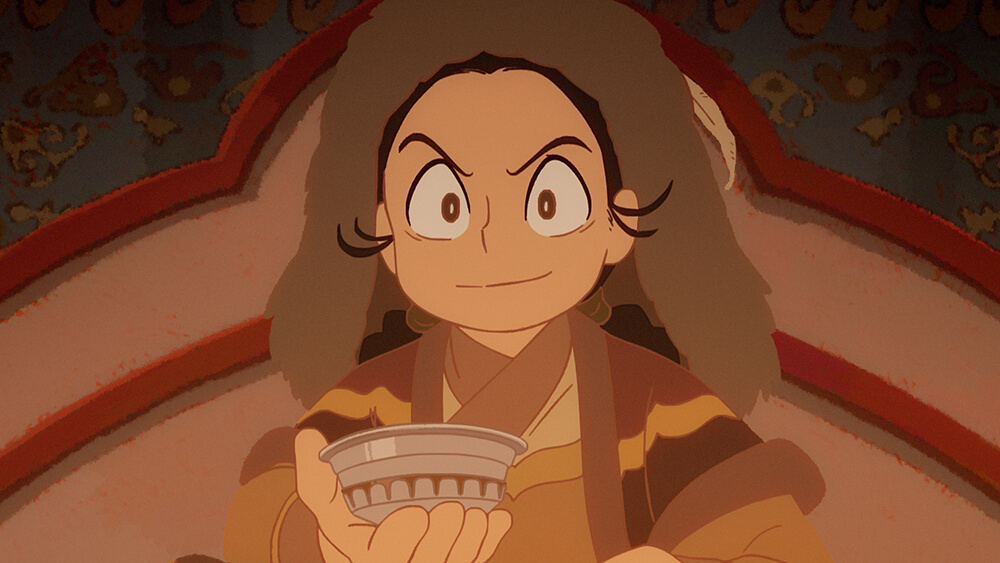
Sitara’s knowledge becomes increasingly valuable inside the court.
Töregene — Another Woman With a Grudge
One of the most important relationships in the anime develops between Sitara and Töregene. Töregene is the sixth wife of Ögedei and carries painful memories connected to the Mongol conquest.
Unlike Sitara, Töregene has already lived through another chapter of Mongol expansion. Her past includes the Merkit tribe, her marriage to Dayir, and her connection with Dayir’s daughter Khulan. The destruction of that life gives her a personal reason to distrust the empire.
When Sitara discovers that Töregene also carries resentment toward the Mongol Empire, the two women find an unexpected point of connection.
Sitara and Töregene’s Alliance
The alliance between Sitara and Töregene changes the scale of the story. Sitara possesses knowledge and analytical ability, while Töregene has a position close to the center of political power.
Together, they begin to consider how the empire might be challenged from within. Their cooperation is not based on simple friendship. It is built around shared experiences, mutual understanding, and a common desire for revenge.
Their partnership is one of the defining relationships of the series and gives the anime much of its political and psychological tension.
Sitara and Töregene become connected by their shared resentment and ambitions.
The Mongol Court
Once Sitara enters the wider world of the Mongol court, the series becomes increasingly focused on political strategy. Princes and consorts have their own interests, and information can be as important as military strength.
The court is filled with relationships that are difficult to read from the outside. A polite conversation can carry political meaning, while a seemingly small decision can affect the balance between powerful families.
Sitara’s ability to observe these details becomes one of her greatest advantages.
Ögedei and the Struggle for Power
After the death of Genghis Khan, the political structure of the empire begins to shift. Ögedei becomes Great Khan, while the relationships among the princes and their respective families create new tensions.
Sitara and Töregene become increasingly interested in these political divisions. Sitara’s strategy involves understanding where authority is concentrated and how rival interests can influence the decisions of powerful people.
Boraqchin — The First Empress
Boraqchin, the First Empress of Ögedei, introduces another layer of political complexity. She is portrayed as calm, dignified, and highly strategic.
Sitara eventually receives an opportunity to meet Boraqchin after her knowledge and literacy become recognized. When Sitara encounters the empress suffering from illness, she applies what she knows to identify a possible cause and treatment.
This moment demonstrates how Sitara can use knowledge not simply to survive but to gain influence within a powerful environment.
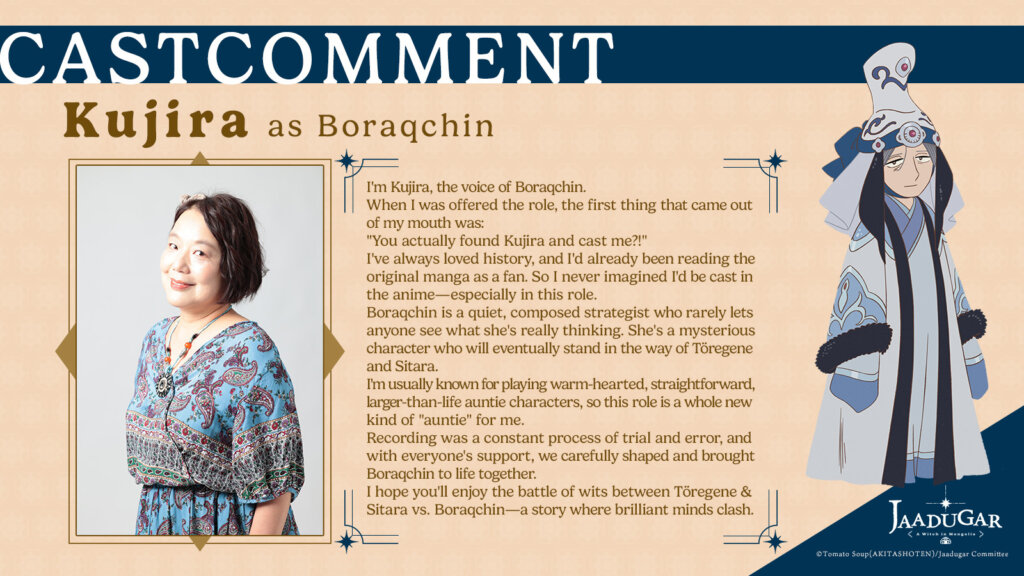
Boraqchin represents another powerful force inside the imperial court.
The Importance of Knowledge
Knowledge is essentially the main weapon of Jaadugar. Sitara does not have an army, royal blood, or overwhelming physical power. Instead, she has education.
The anime repeatedly demonstrates that information can change a person’s position. Reading, medicine, mathematics, languages, history, and observation all become useful tools.
This makes the series different from many historical anime where characters solve problems through combat. In Jaadugar, a conversation, a book, a medical observation, or a carefully chosen sentence can have consequences as significant as a battlefield decision.
The Meaning Behind the Title
The word “Jaadugar” refers to a magician or someone associated with magic. The series uses this idea in a symbolic way. Sitara’s greatest “magic” is not supernatural power; it is her intellect.
She learns how the world works and then uses that understanding to create possibilities for herself. Her intelligence allows her to influence people who possess far greater formal power than she does.
Historical Setting
Jaadugar is set during the 13th century, moving between Persian and Mongol cultural environments. The series spends considerable attention on architecture, clothing, books, landscapes, customs, court life, and the daily experiences of people living during this period.
The historical setting is not simply decoration. It directly shapes the characters’ choices. Travel, communication, political authority, social hierarchy, education, and warfare all influence how Sitara can operate.
The Visual Style of Science SARU
Science SARU handles the animation production, bringing a distinctive visual approach to the series. The anime combines expressive character animation with detailed environments and broad landscapes.
The contrast between the intimate scenes inside homes and tents and the enormous Mongolian landscapes helps communicate the scale of the story. Sitara’s personal life may be small in comparison with an empire, but her decisions take place inside that enormous historical world.
The visual direction also allows quiet moments to remain important. Not every dramatic scene requires a large action sequence. Facial expressions, silence, books, clothing, and changes in atmosphere can carry significant emotional information.
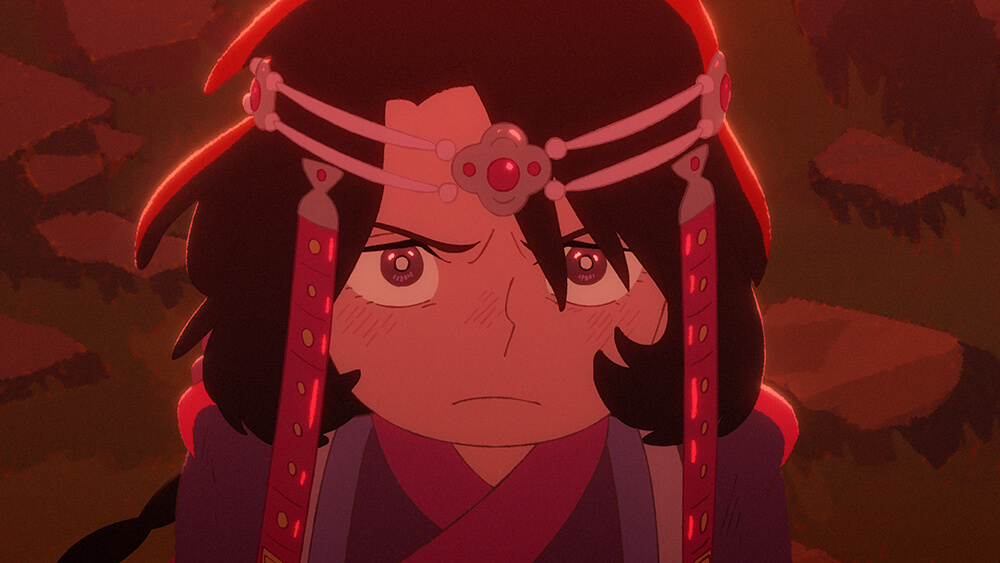
The anime combines expressive character animation with dramatic historical atmosphere.
Music and Atmosphere
The music is composed by Koshiro Hino. The series also features “Stella” by SEKAI NO OWARI as its opening theme.
The musical direction complements the anime’s mixture of personal drama, historical scale, and emotional tension. The atmosphere often moves between peaceful scholarly scenes and moments where the threat of political or military violence becomes unavoidable.
Political Strategy Instead of Traditional Battles
Battles exist in the historical background of Jaadugar, but the series is much more interested in what happens around them. Who controls information? Who trusts whom? Which prince has influence? Which marriage could change political relationships? Who can be approached safely?
These questions create the central tension of the anime. Sitara is constantly trying to understand a system much larger than herself while protecting her true intentions.
Sitara’s Revenge
Revenge is one of the strongest motivations in the story, but Jaadugar treats revenge as something connected to memory and identity. Sitara remembers the people and life she lost, especially Fatima and the scholarly world that gave her a new future.
Her desire to recover Elements is therefore more than a simple attempt to retrieve a book. The book represents the life and knowledge that were taken from her.
Character Relationships
One of the anime’s strengths is the way its characters are connected through complicated personal and political relationships. Sitara’s connection with Muhammad belongs to her early scholarly life. Her relationship with Shira helps her navigate the Mongol world. Sorghaghtani gives her access to an influential household, while Töregene becomes her closest ally in revenge.
Meanwhile, figures such as Tolui, Ögedei, and Boraqchin represent different positions within the imperial structure. Their decisions continually affect Sitara’s situation.
Why Jaadugar Feels Different
Jaadugar does not depend on a conventional fantasy power system. There are no magical battles where the protagonist suddenly unlocks a stronger ability. Instead, the story treats intelligence, education, language, medicine, and political awareness as practical tools.
The result is a slower and more strategic kind of storytelling. Viewers are encouraged to pay attention to conversations and relationships because small details can become important later.
The 12-Episode First Season
The first television season consists of 12 episodes. The official story material follows Sitara from her early life in Tus through her captivity, her entry into the Mongol court, and her growing involvement with Töregene and the imperial political struggle.
By the later episodes, the story has expanded far beyond Sitara’s personal revenge. Political marriages, succession, military conflict, illness, court alliances, and competing plans all begin to intersect.
Episode 12 and the Continuing Story
In Episode 12, Sorghaghtani refuses a proposed political marriage involving Güyük after being influenced by Sitara. Boraqchin’s strategy surrounding Tolui’s clan is challenged, while Sitara continues searching for Töregene.
At the same time, Ögedei summons Sitara and proposes a wager. The episode leaves the story with additional questions surrounding Sitara’s next moves and her position inside the empire.
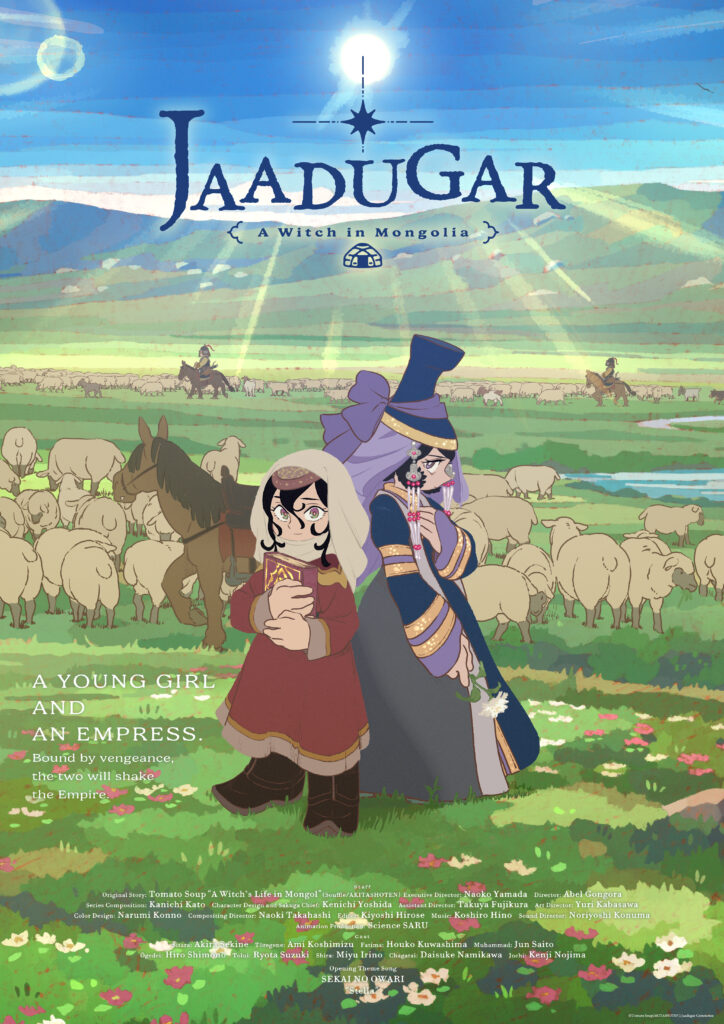
Jaadugar’s main visual captures Sitara and Töregene against the Mongolian landscape.
Staff and Production
The anime is produced by Science SARU. Naoko Yamada serves as executive director, while Abel Gongora directs the series. Kanichi Kato handles series composition, and Kenichi Yoshida serves as character designer and chief animation director. Music is composed by Koshiro Hino.
The main cast includes Akira Sekine as Sitara, Ami Koshimizu as Töregene, Houko Kuwashima as Fatima, Jun Saito as Muhammad, Ryota Suzuki as Tolui, Miyu Irino as Shira, Hiro Shimono as Ögedei, Daisuke Namikawa as Chagatai, and Kenji Nojima as Jochi.
Streaming Information
The anime premiered in July 2026. The first two episodes were presented together as a one-hour premiere in Japan. The English-subtitled and English-dubbed versions are available through Crunchyroll, with the dub following the subtitled release.
Availability can differ by country and region, so viewers should check their local streaming catalog before watching.
Watch Jaadugar: A Witch in Mongolia
You can check the official anime website for the latest information, trailers, episode details, character updates, and official news.
Note: Jaadugar: A Witch in Mongolia is a historical drama built around
characters, knowledge, political strategy, and survival. If you enjoy anime where intelligence and
relationships matter as much as action, this series offers a very different type of historical
storytelling.
Final Thoughts
Jaadugar: A Witch in Mongolia tells the story of a young woman who loses almost everything but refuses to allow her circumstances to determine the rest of her life. Sitara begins as a displaced girl in 13th-century Persia and gradually becomes someone capable of navigating one of the most powerful political environments of her era.
Her journey is driven by education. The books she reads, the knowledge she gains, and the lessons she learns from the people around her become the foundation of her survival. When the Mongol Empire destroys the world she knew, those lessons remain with her.
The story becomes even more compelling when Töregene enters Sitara’s life. Both women have suffered because of the empire, but they occupy very different positions within it. Their alliance creates a fascinating contrast between personal revenge and political influence.
Science SARU’s animation gives the story a distinctive visual identity, while the historical setting provides an atmosphere that feels very different from modern fantasy anime. From the scholarly household in Tus to the vast Mongolian steppe and the complicated imperial court, the series builds a world where every character has something to lose and every decision can have consequences.
Ultimately, Jaadugar: A Witch in Mongolia is a story about survival through intelligence. Sitara’s greatest weapon is not a sword or supernatural power. It is the ability to learn, understand people, and use knowledge when the world around her becomes increasingly dangerous.